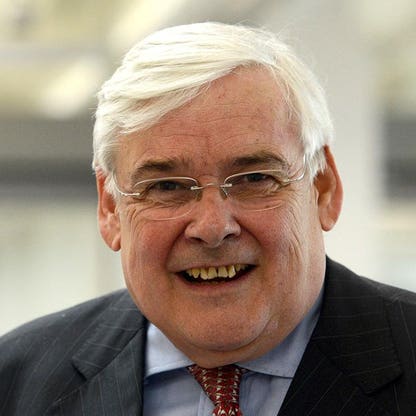
Richard Oetker: His 12.5% Stake in an $8 Billion Empire
Richard Oetker, a name synonymous with German industrial prowess and a legacy stretching back over a century, holds a commanding position within one of Europe's most enduring and diversified family conglomerates. While often preferring to remain out of the public spotlight, his significant ownership stake in the Dr. August Oetker Group is a cornerstone of his considerable personal wealth. Understanding the foundation of
Richard Oetker's net worth requires a deep dive into the history, structure, and sheer scale of the enterprise he helped steer. This article will unravel the complexities of his fortune, his pivotal role in the family business, and the enduring legacy of an empire built on everything from baking powder to luxury hotels.
The Dr. August Oetker Legacy: From Baking Powder to Billion-Dollar Conglomerate
The story of the Dr. August Oetker Group is a testament to entrepreneurial vision and strategic diversification. It began in 1891 when August Oetker, a pharmacist with an innovative spirit, introduced non-perishable baking powder to the market. This simple yet revolutionary product laid the foundation for a food empire that would eventually expand far beyond the kitchen.
After the tumultuous era of World War II, it was Richard Oetker's father, Rudolf August Oetker (a former Nazi SS officer who later focused intensely on business rebuilding), who truly propelled the company into a modern conglomerate. Rudolf August displayed remarkable acumen, not only developing a vast array of additional food products but also embarking on a successful diversification strategy. Under his leadership, the Oetker Group branched out into beverages, acquiring breweries and mineral water producers; financial services, establishing banks and insurance companies; and even the hospitality sector, creating the prestigious Oetker Collection of luxury hotels. This shrewd expansion transformed the company from a mere food producer into a multifaceted enterprise with interests spanning numerous industries, generating annual sales that make it a formidable global player.
Decoding Richard Oetker's Net Worth: A Stake in Immense Value
At the heart of
Richard Oetker's net worth is his substantial 12.5% ownership share in the privately held Dr. August Oetker Group. This stake represents a significant slice of a powerful, diversified conglomerate that generates annual sales reaching an impressive $8 billion. While a precise net worth figure for a private individual with holdings in a closely guarded family business is always an estimation, this 12.5% stake provides a clear indicator of the scale of his wealth.
To grasp the magnitude of this, consider the common methods of valuing large, stable enterprises. For a company generating $8 billion in annual sales, its overall valuation – whether through market capitalization if publicly traded, or an enterprise value if privately held – would typically be a multiple of its revenue, often ranging from 1x to 3x, or even higher for highly profitable or rapidly growing sectors. While the original source cites "an $8 billion (sales) conglomerate," the framing of an "$8 Billion Empire" in discussions about its stakeholders often implies an overall valuation in that ballpark, or even considerably higher.
If we conservatively consider the $8 billion figure as a proxy for the overall value of the Oetker Group's holdings, then Richard Oetker's 12.5% share would theoretically represent a significant $1 billion portion of that wealth. This calculation underscores the immense value tied to his ownership. It’s important to note that this figure primarily reflects the value of his stake in the core business and does not necessarily encompass other personal assets or investments he might hold independently.
The Dr. August Oetker Group is not just a collection of assets; it's a meticulously managed machine with diverse revenue streams. From the iconic Dr. Oetker food brand found in kitchens worldwide to the Radeberger Group's breweries, the Commerzbank-partnered financial services, and the exquisite Oetker Collection of hotels (which includes gems like Le Bristol Paris and Hotel du Cap-Eden-Roc), Richard's ownership stake provides him direct participation in the profits and appreciation of these various ventures. For a deeper understanding of how these diverse holdings contribute to his financial standing and the broader family dynamics, readers might find
Unpacking Richard Oetker's Wealth: Family Business & Power an insightful read.
Calculating the net worth of individuals holding significant stakes in private companies is inherently complex. Factors such as debt, specific company valuation methodologies, and the liquidity of assets can all influence the final figure. However, the sheer scale of the Oetker Group's operations and its consistent profitability ensure that Richard Oetker’s 12.5% ownership is a cornerstone of a formidable fortune, placing him among Germany's wealthiest individuals.
Navigating Succession and Leadership: The Oetker Family Saga
The path to leadership within a multi-generational family business is rarely smooth, and the Oetker Group was no exception. Richard Oetker's ascent to the helm as General Partner in 2010 came after a significant internal power struggle. The expectation had been that his brother, Alfred Oetker, would assume the leading role. However, older siblings intervened, ultimately blocking Alfred's path and instead crowning Richard. This kind of internal dynamic is not uncommon in large family enterprises, where tradition, individual capabilities, and inter-sibling relationships often collide.
Richard's leadership brought stability, but the complexities of family governance continued. By 2015, another internal conflict, specifically a proxy fight, was looming before arbitrators. This situation highlighted the perennial challenge for family businesses: balancing family interests and professional management. The resolution demonstrated a forward-thinking approach: the family groups agreed to recruit an outside CEO to take the reins upon Richard's retirement. This strategic decision signaled a move towards enhanced corporate governance, introducing an independent leader to navigate the conglomerate's future while respecting the family's ownership. Richard Oetker subsequently retired in 2017, marking the end of a direct Oetker family member holding the top operational leadership role after decades.
Practical Tip for Family Businesses: Succession planning should start early and involve clear communication channels. Establishing a formal family council, defining roles for family members (both executive and non-executive), and considering external professional management can mitigate conflicts and ensure the longevity of the business. The Oetker case exemplifies how a family can adapt its governance structure to ensure continued success amidst internal pressures. The intricacies of his leadership and the conglomerate's evolution under his guidance are further explored in
Richard Oetker's Ascent: Leading an $8 Billion Conglomerate.
Beyond the Balance Sheet: The Oetker Group's Enduring Influence
The Dr. August Oetker Group's influence extends far beyond the impressive figures on its balance sheet. As a key player in the German economy, it provides employment for thousands and contributes significantly to various sectors. Its food division, Dr. Oetker, is a household name across continents, synonymous with quality and convenience. The Radeberger Group stands as Germany's largest private brewery group, embodying national brewing traditions. The Oetker Collection represents the pinnacle of luxury hospitality, offering exquisite experiences in some of the world's most beautiful destinations.
This enduring influence is a testament to several core philosophies that have guided the company for over a century:
- Long-Term Vision: Unlike publicly traded companies often focused on quarterly results, the Oetker Group, as a private entity, can prioritize long-term investments and sustainable growth. This allows for strategic decisions that might not yield immediate returns but solidify future market position.
- Diversification: The deliberate expansion into disparate industries like food, beverages, financial services, and hotels has created a resilient business model, capable of weathering economic fluctuations in any single sector.
- Brand Building: A consistent focus on brand quality and innovation has allowed the Oetker Group's products to maintain market leadership and consumer trust for generations.
These pillars not only ensured the prosperity of the group but also underpinned the creation of substantial wealth for its owners, including Richard Oetker. His role in maintaining and furthering this legacy, particularly during his tenure as General Partner, has cemented his place in the annals of German industrial history.
Conclusion
Richard Oetker's net worth is intrinsically linked to his substantial 12.5% stake in the Dr. August Oetker Group, a diversified conglomerate generating $8 billion in annual sales. This ownership positions him as a key beneficiary of a multi-billion dollar empire that spans food, beverages, financial services, and luxury hotels. His journey, marked by family dynamics, strategic leadership, and eventual transition, reflects the complexities and enduring power of dynastic wealth. As the Oetker Group continues to thrive under professional management, the foundational wealth represented by Richard Oetker's share remains a testament to the century-old vision and expansion of a remarkable German enterprise.